




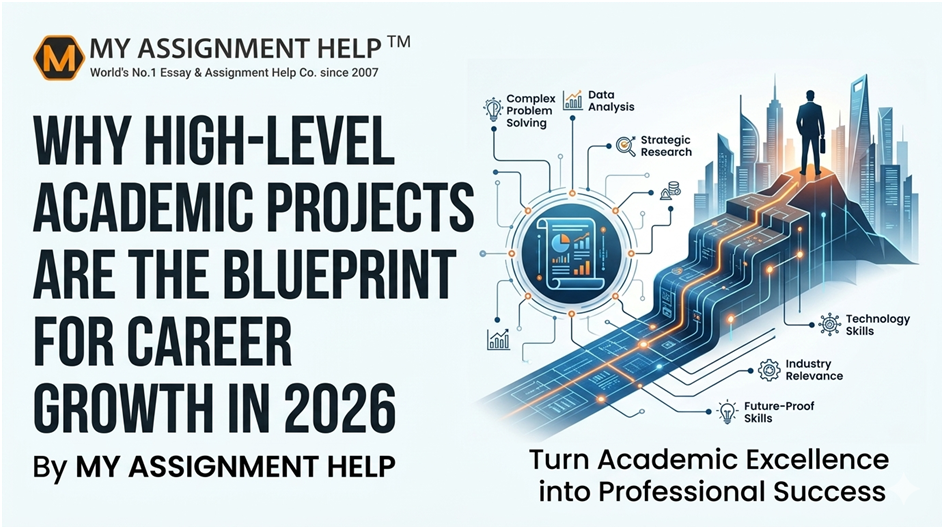
In the rapidly shifting economic landscape of 2026, the traditional boundary between “academic learning” and “professional execution” has effectively vanished. As Artificial Intelligence automates entry-level technical tasks, employers in the United States and beyond have pivoted their hiring criteria. They no longer seek candidates who simply “know” a subject; they demand individuals who can manage complex, multi-layered projects from inception to delivery.
Today, high-level academic projects—ranging from capstone theses in Data Science to integrated marketing audits—serve as the primary laboratory for the high-stakes skills required in the modern workforce. This blog explores why these projects are no longer just hurdles for graduation, but the very blueprint for a six-figure career.
The Shift: From Rote Learning to Project-Based Mastery
By mid-2026, the “Skills Gap” has been replaced by the “Implementation Gap.” According to recent labor statistics, 74% of hiring managers in STEM and Business sectors prioritize “demonstrated project ownership” over GPA. This shift is driven by the need for workers who can navigate ambiguity, a trait honed during rigorous academic research.
When students engage in high-level assignments, they aren’t just writing papers; they are simulating a professional environment. For those feeling overwhelmed by these increasing demands, seeking professional guidance is a common strategic move. Many students turn to myassignmenthelp to ensure their foundational research is sound. If you find yourself struggling to balance these complex requirements, you might decide to hire an expert to do my project for me to maintain a competitive edge while you focus on high-level strategy. This approach allows for a deeper understanding of project management without getting bogged down by administrative bottlenecks.
1. Bridging the E-E-A-T Gap Early
Google’s E-E-A-T (Experience, Expertise, Authoritativeness, and Trustworthiness) guidelines aren’t just for SEO; they are the new standard for professional credibility.
- Experience: Completing a complex project proves you have “done the work.”
- Expertise: Deep-dive assignments require a level of subject matter mastery that short-form testing cannot capture.
- Authoritativeness: A well-cited, data-driven project can often be published or shared on LinkedIn, establishing you as a thought leader before you even graduate.
For international students, particularly those navigating the rigorous standards of the British education system, local expertise is vital. Utilizing a specialized assignment writing help service ensures that your work meets the specific linguistic and structural nuances required by top-tier UK institutions, further solidifying your global employability.
2. Strategic Data Literacy: The 2026 Currency
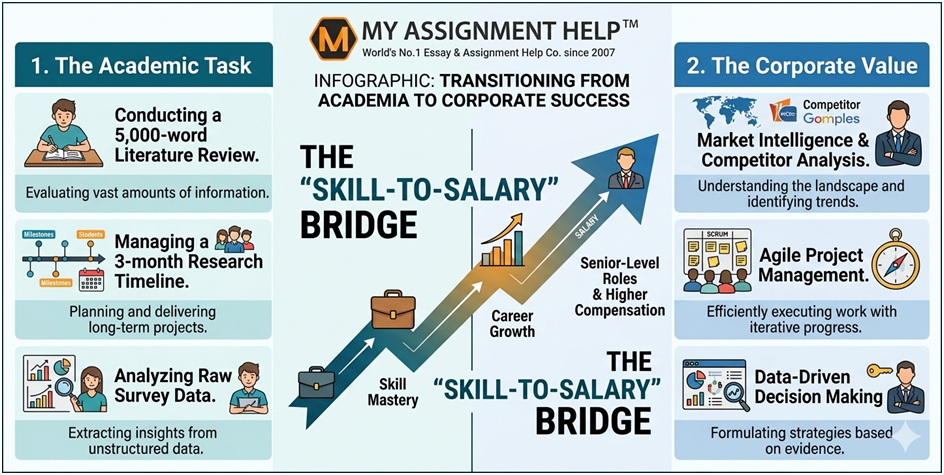
In 2026, data is the “new oil,” but project management is the “refinery.” High-level academic projects force students to interact with raw data, perform statistical analysis, and—most importantly—visualize that data for stakeholders.
Whether it’s using Python for a biology simulation or Tableau for a market forecast, the technical stack used in university projects is now identical to the stack used in Fortune 500 boardrooms. Students who treat their projects as professional deliverables are 40% more likely to secure mid-management roles within 12 months of graduation.
3. The “Soft Skill” Synthesis
While “soft skills” are often dismissed, academic projects are the ultimate test of:
- Critical Thinking: Evaluating conflicting sources.
- Time Management: Navigating “crunch periods” and milestones.
- Adaptability: Pivoting when initial hypotheses fail—a daily reality in the 2026 corporate world.
Key Takeaways for Career Success
- Treat Assignments as Case Studies: Every major project should be formatted so it can be added to a professional portfolio.
- Leverage Expert Mentorship: Don’t work in a vacuum. Use academic support services to refine your methodology and ensure E-E-A-T compliance.
- Focus on Cross-Disciplinary Integration: The most valuable projects in 2026 are those that bridge two fields (e.g., LegalTech or Bio-Informatics).
- Standardize Your Quality: Ensure every submission reflects a professional level of English and technical accuracy, regardless of the regional market (US, UK, or AU).
FAQ Section
Q1: How do I showcase academic projects on my resume?
A: Create a “Selected Projects” section. Treat the project title like a job title and use bullet points to describe the “Action” taken and the “Result” (e.g., “Analyzed 500+ data points to forecast…”).
Q2: Are academic projects really as valuable as internships?
A: In 2026, they are often viewed as equal. An internship shows you can work in a company, but a high-level project shows you can own a product or a solution from start to finish.
Q3: Is it okay to use academic help services for complex projects?
A: Yes, provided they are used as a model for learning and quality control. Professional services help ensure your work meets the high formatting and research standards required by modern universities.
Q4: What is the most important skill for projects in 2026?
A: Information synthesis—the ability to take vast amounts of AI-generated data and turn it into a human-centric, actionable strategy.
Conclusion
The blueprint for career growth is no longer found in a textbook; it is built through the trial and error of high-level project work. By investing the time to master these assignments—and seeking the right support when necessary—you are not just earning a degree; you are building the foundation of your professional future.
Author Bio
James Sterling is a Senior Academic Consultant and Lead Content Strategist at MyAssignmentHelp. With over a decade of experience in SEO-driven educational content and curriculum mapping, James specializes in helping students bridge the gap between academic theory and professional application. He is a frequent contributor to forums on E-E-A-T compliance and the future of AI in education.
References & Data Sources:
- U.S. Bureau of Labor Statistics (2025-2026 Projections): “The Rise of Project-Based Hiring in Tech and Management.”
- The Global Education Report 2026: “Bridging the Gap: Academic Outcomes vs. Workforce Readiness.”
- Search Engine Journal: “Understanding E-E-A-T for Academic and Professional Authority.”
- World Economic Forum (2025): “The Future of Jobs Report: The Value of Analytical Thinking.
About the Author