




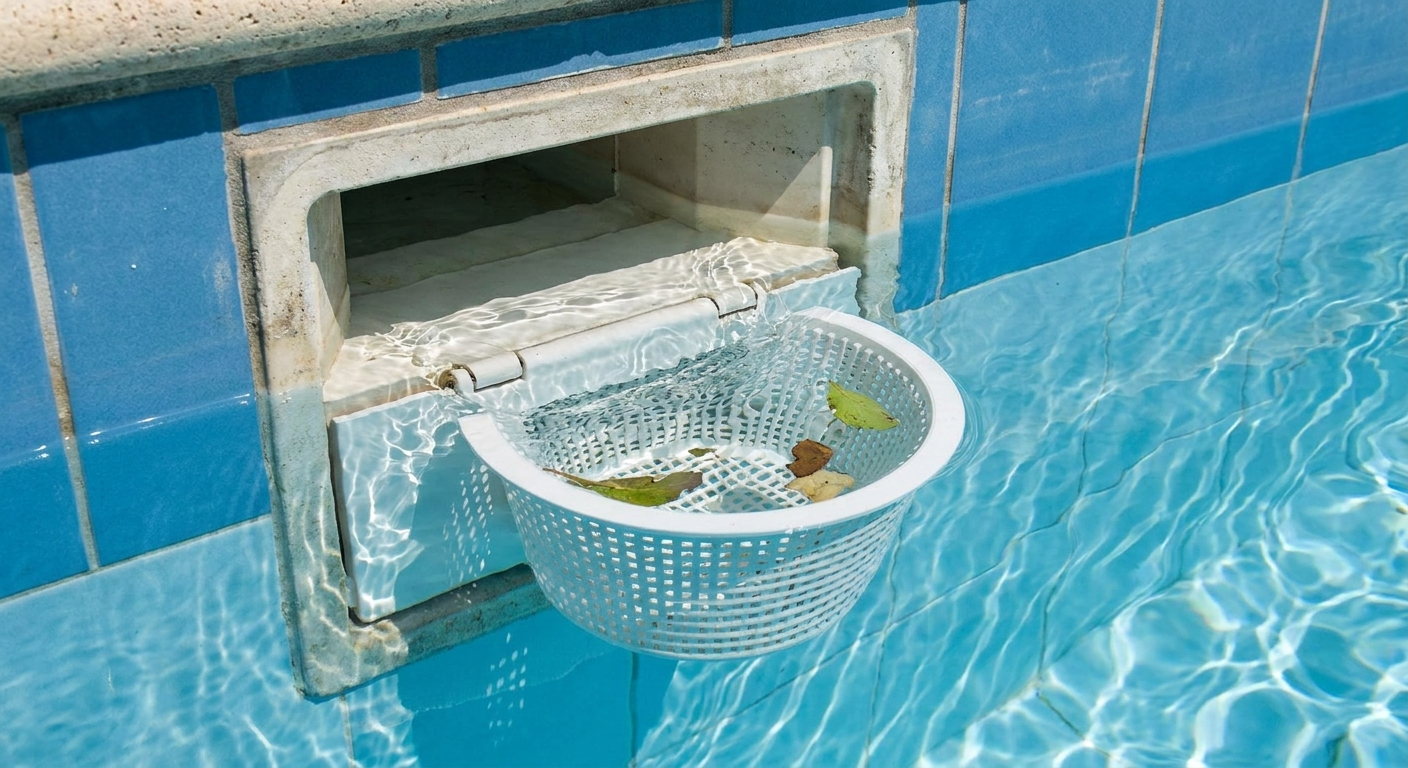
A pool skimmer is an integral part of maintaining a clean and healthy swimming pool.
It acts as the first line of defense for your pool’s circulation system, capturing leaves, insects, and other floating debris before they can sink and burden the pump and filter.
Without a functioning skimmer, surface contaminants quickly break down, increasing chlorine demand and leading to cloudy water.
Most residential pools rely on built-in skimmers installed at the waterline. These devices work quietly but are essential for preventing organic material from breaking down and consuming chlorine. Understanding how they function and how to care for them can save time and money on repairs.
What Is a Pool Skimmer and How Does It Work?
A built-in skimmer is a plastic box embedded in the pool wall, accessible from the deck.
It features a rectangular opening at the waterline, allowing surface water to flow in.
Inside, a basket traps large debris, while the water continues to the pump and filter.
The entire circulation cycle relies on this initial collection point to protect downstream equipment.
A critical component inside the skimmer opening is the weir door. This floating flap moves with the water level.
When the pump is running, the weir door tilts inward, creating a sheet of water that pulls debris into the basket.
When the pump stops, the weir door floats back up to seal the opening, preventing captured material from floating back into the pool. A broken weir door significantly reduces skimming efficiency.
The water level must sit approximately halfway up the skimmer opening.
If the water is too low, the pump will suck air, causing noise and potential damage.
If the water is too high, the skimmer draws from below the surface and loses its ability to capture floating debris effectively.
Assessing Your Pool’s Skimmer Needs
Different pools require different skimmer configurations.
Most current design standards recommend one skimmer for every 500 square feet of water surface area.
A standard 16-by-32-foot pool benefits from having two skimmers to ensure complete surface coverage.
Proper placement matters, so position skimmers where prevailing winds naturally push debris.
When selecting a replacement skimmer, the pool construction type affects the choice. In-ground pools vary by vinyl, fiberglass, or gunite.
Vinyl and fiberglass skimmers require a gasket to seal against the liner, while gunite skimmers do not.
Pipe size is another factor, with 1.5-inch and 2-inch PVC being standard.
Essential Skimmer Maintenance for Peak Performance
Keeping the skimmer basket clean is the most important task. A full basket restricts water flow and reduces filtration. Aim to clean the basket at least once a week, or more frequently during heavy debris seasons.
Steps for Cleaning the Skimmer Basket:
- Turn off the pump to prevent air from entering the system.
- Remove the skimmer lid by lifting it from the edge.
- Lift out the basket and empty the collected leaves and debris.
- Rinse the basket thoroughly with a garden hose to remove oils and fine sediment.
- Inspect the basket for cracks. Replace it if damaged.
- Reinstall the basket and ensure it sits flat at the bottom.
- Replace the lid securely.
Every few weeks, wipe down the inside of the skimmer housing. Sunscreen and body oils accumulate on the walls and can degrade water quality. A skimmer sock can help trap microscopic particles like pollen and pet hair, further reducing the load on the filter.
Inspecting the weir door during each cleaning is a good habit. The weir should swing back and forth freely. If it is stuck or broken, replace it promptly. A new weir door is one of the most affordable fixes in pool maintenance.
Common Skimmer Issues and Troubleshooting
A frequent problem is a clogged skimmer line.
If the pump loses suction or the pressure gauge fluctuates, debris may be blocking the line.
A drain cleaning bladder can be attached to a garden hose and inserted into the skimmer port to push out blockages.
Alternating the diverter valve between suction lines may also dislodge obstructions.
Placing chlorine tablets directly in the skimmer basket is not recommended. This practice forces highly concentrated chlorinated water through the pump and filter, degrading seals over time. An automatic chlorinator or a floating dispenser is a safer alternative.
Running the pump without a basket allows debris to travel to the impeller. A jammed impeller causes the motor to overheat and can lead to expensive repairs. Always ensure the basket is present and in good condition.
Seasonal Care and Advanced Water Management
Winterizing the skimmer properly prevents costly freeze damage.
Water expands when it freezes, and skimmers are vulnerable to cracking.
For in-ground pools, lower the water level below the skimmer opening.
Install an ice compensator to absorb the pressure of expanding ice.
Above-ground pools often require a skimmer cover to keep debris out during the off-season.
For pool owners who want to ensure their skimmer is always operating at peak efficiency, a detailed reference can provide guidance on selection and advanced maintenance techniques.
If the skimmer is not pulling in debris as usual, a pool skimmer guide can help you narrow down whether the problem is a clogged basket, worn weir door, or weak circulation.
Conclusion
The skimmer is a small but indispensable part of your pool equipment.
Regular maintenance, from emptying the basket to inspecting the weir, enhances performance and extends the lifespan of your circulation system.
By understanding how your skimmer works and addressing minor issues early, you can enjoy a cleaner, healthier pool with less effort.
About the Author